Case study 03
LightStack Solutions
From concept to shipped software.
I co-founded LightStack, a studio that designs, builds and maintains mobile and full-stack applications. Two of its apps are live on the App Store, and both stand on a shared engineering foundation.
- Role
- Co-Founder, full-stack and mobile developer
- Since
- Nov 2025
- Shipped
- Distant and Glucose Tracker, on the App Store
The studio
LightStack builds production iOS and Android apps for clients and for itself, and keeps them running on support and maintenance retainers. The work below is three parts of the same engineering: two shipped apps, and the foundation they share.
Distant: an AI coach that remembers
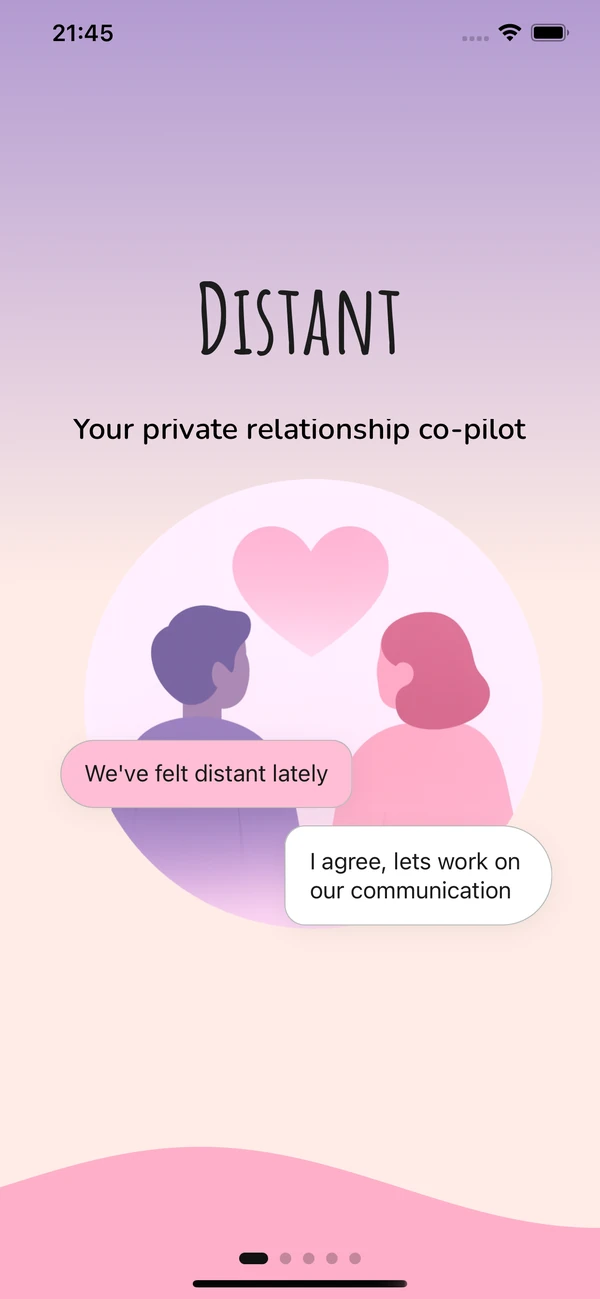
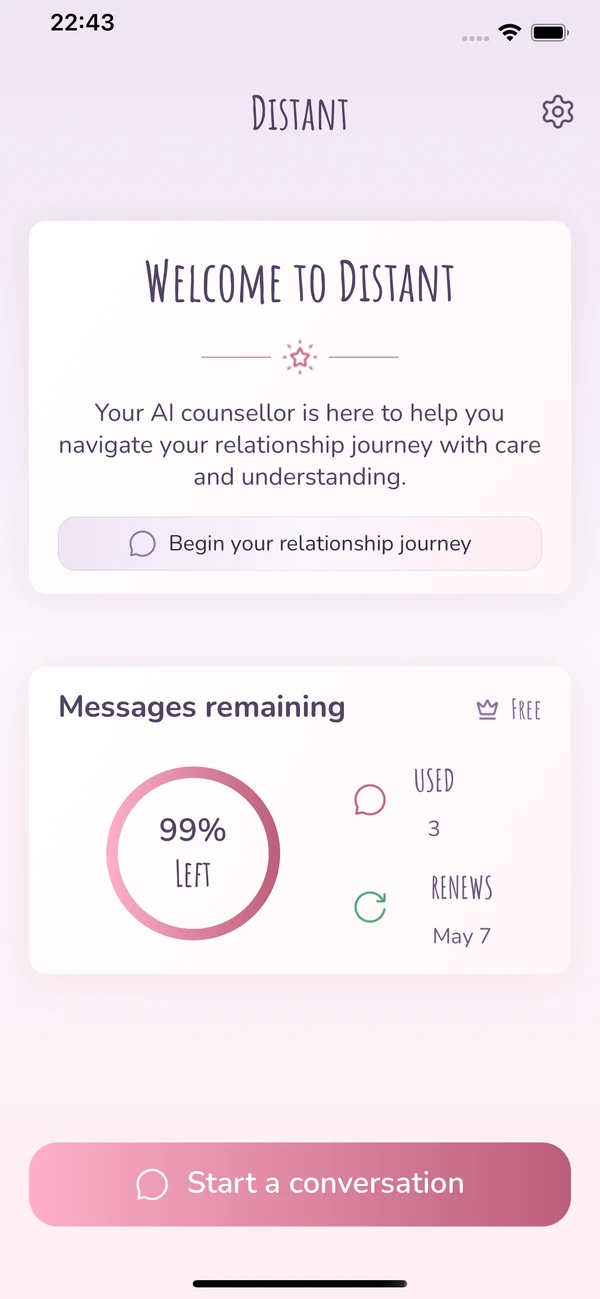
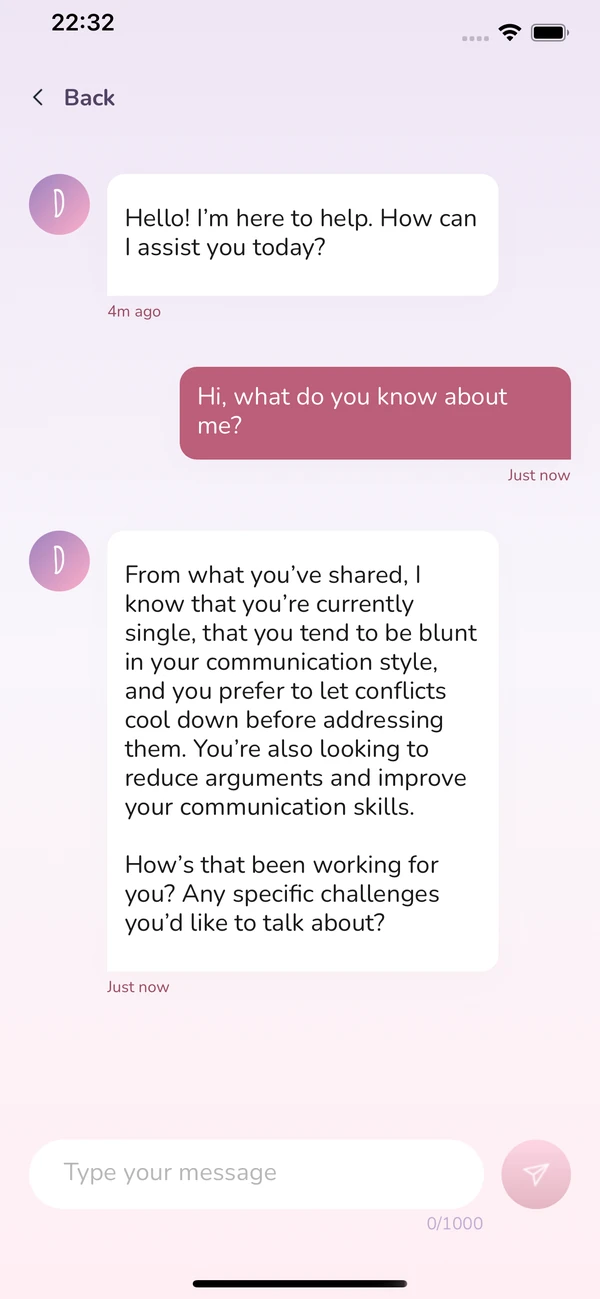
Distant is LightStack’s private AI relationship coach, live on the App Store. I designed and built the coaching experience from the ground up: the LLM-backed conversation engine, a persistent multi-session memory layer, and pattern detection that surfaces behavioural themes across a user’s past check-ins.
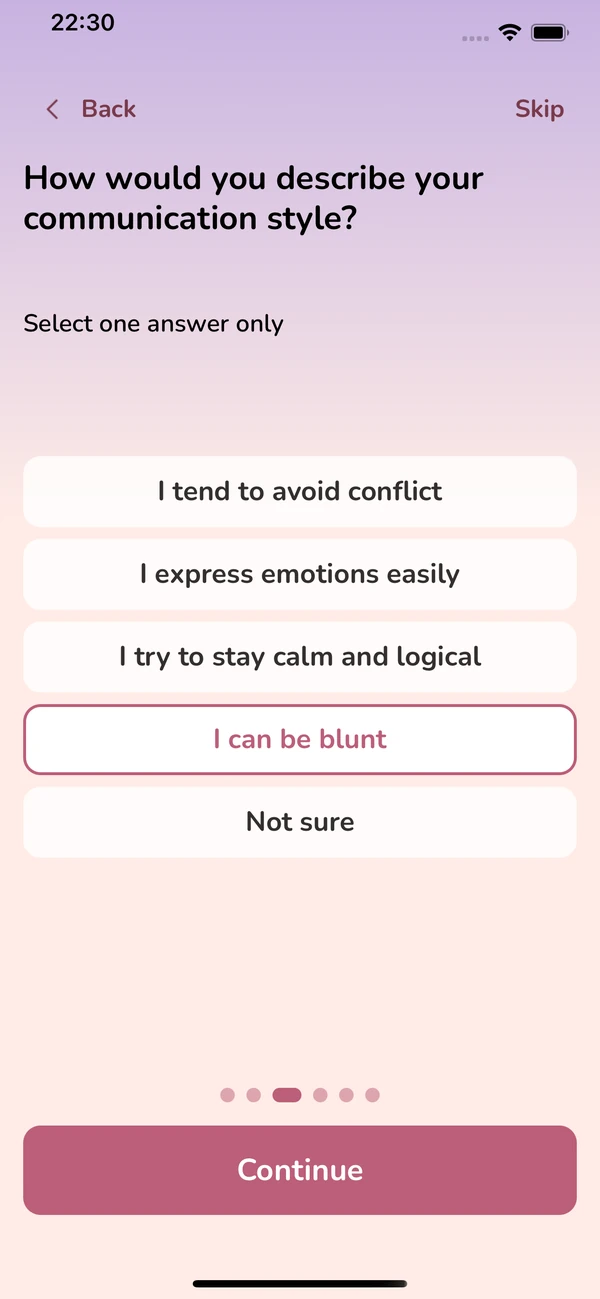
Onboarding is a question graph whose answers compile into the coach’s long-term memory, so the first conversation already knows the person. I also built the core flows (onboarding, sign-in, coaching sessions, conversation history and reflection), UI and backend.
Consent to AI processing is enforced on the server. Deleting an account clears it from every service that holds the user’s data in an idempotent order, the user’s own record last, so an interrupted deletion can always be retried.
Glucose Tracker: a client’s health app
Glucose Tracker brings glucose, meals, insulin and activity into one timeline, for iOS and Android, and it is live on the App Store.
- Two-way, incremental sync with Apple HealthKit and Android Health Connect, with offline queues and retries, so the data stays continuous in the foreground and the background.
- AI meal analysis from a photo or a recipe link, refined in conversation.
- Glucose charts drawn on the GPU with Skia: the day’s profile, and the response after each meal.
- 1,649 unit tests and 73 end-to-end flows.
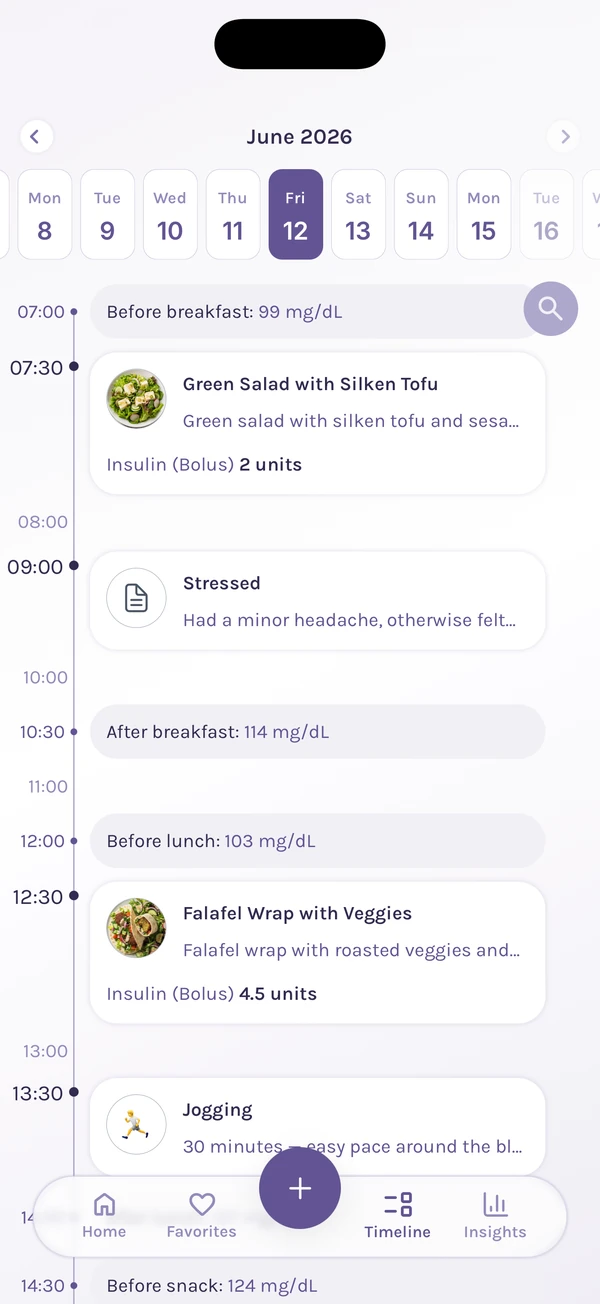
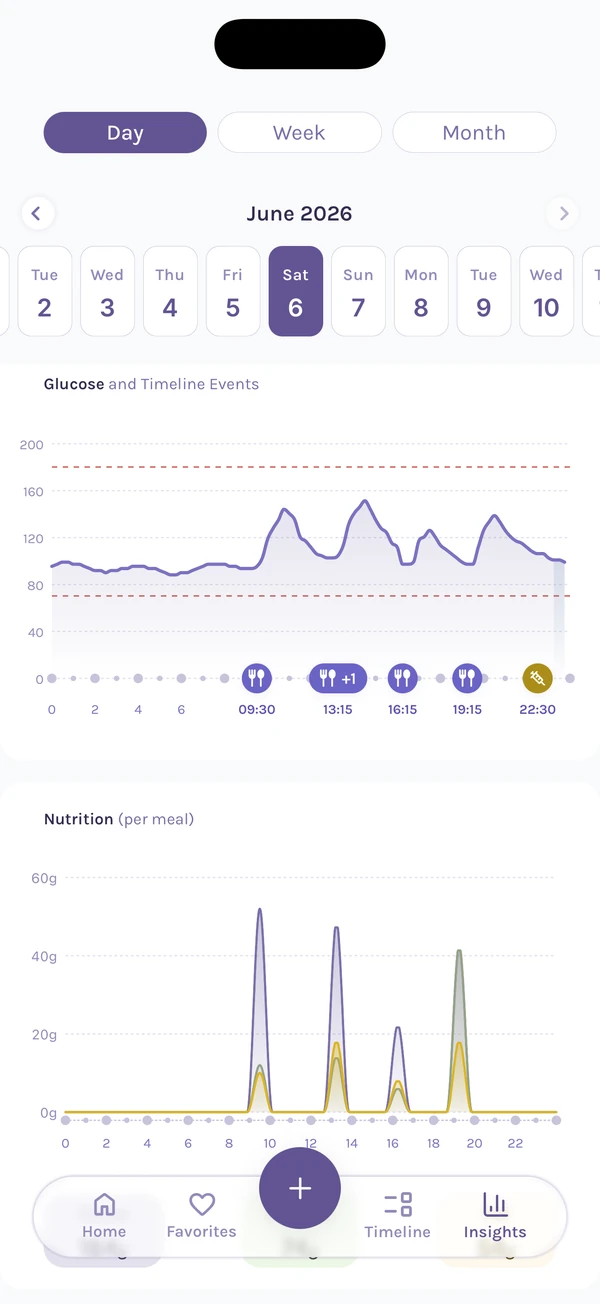
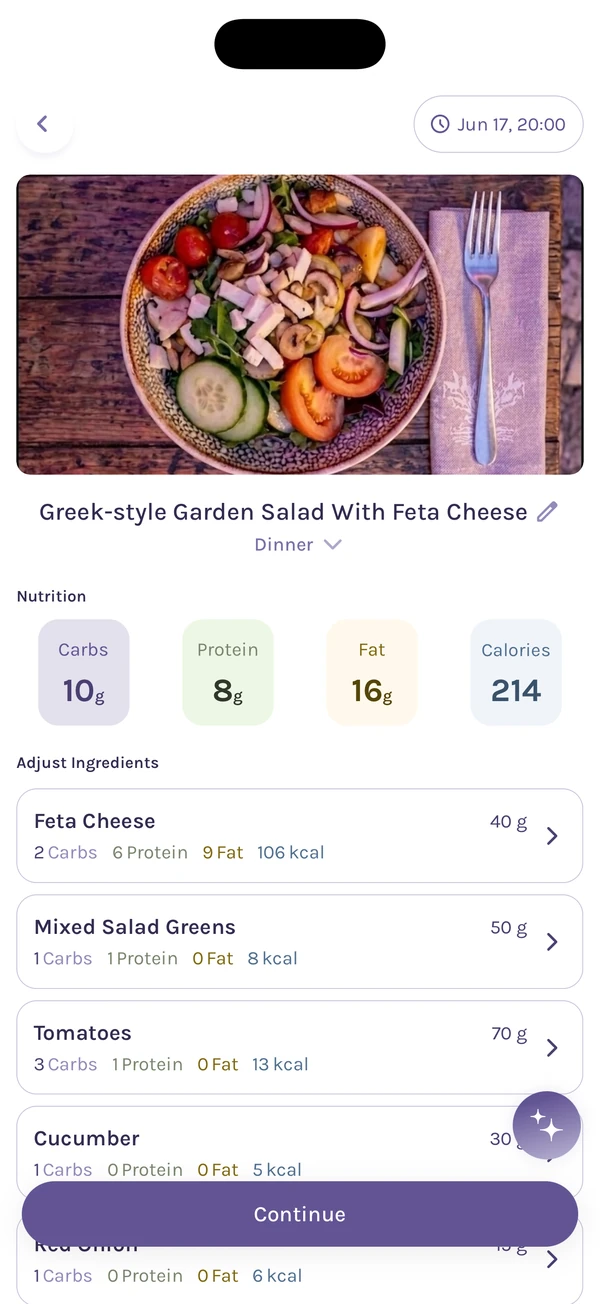
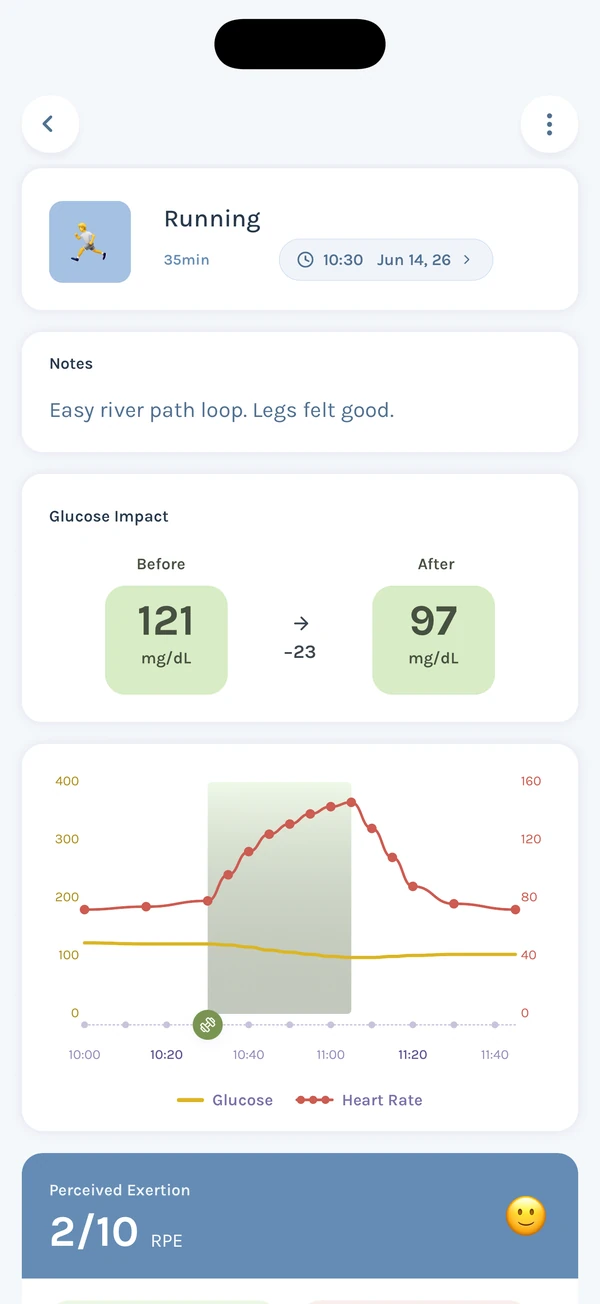
The engineering foundation
Every app needs the same things: sign-in, onboarding and consent, subscriptions and paywalls, notifications and account deletion. A module is promoted into LightStack’s shared foundation once a second app needs it.
Each app sets its modules up in config that is validated at build time, with typed client files. The foundation ships as a private package, with a scaffolder that starts each new app on it, and CI scaffolds a fresh app from the packed release on every change. Its database access rules are pinned by tests.
Account deletion revokes the Apple sign-in token first and deletes the subscription last.
Outcomes
- Two apps live on the App Store: Distant and Glucose Tracker.
- Delivery of repeatable app builds went from months to weeks.
- Seven releases of the foundation in five weeks.